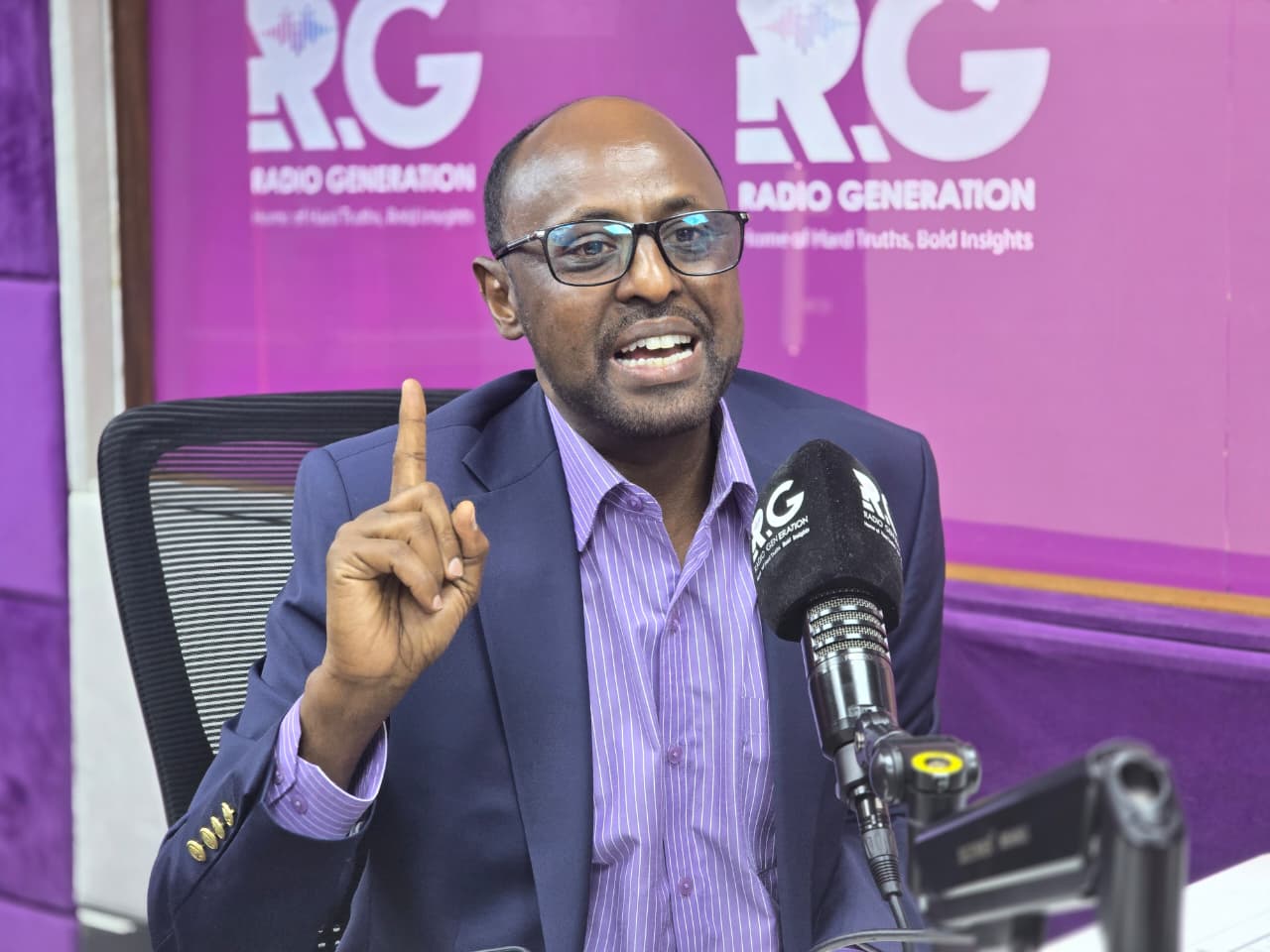
Konza Technopolis Board Member Peter Mucendu has laid out an ambitious and detailed vision for Kenya’s flagship smart city, presenting it as the engine behind the country’s digital future, green growth and online employment drive.
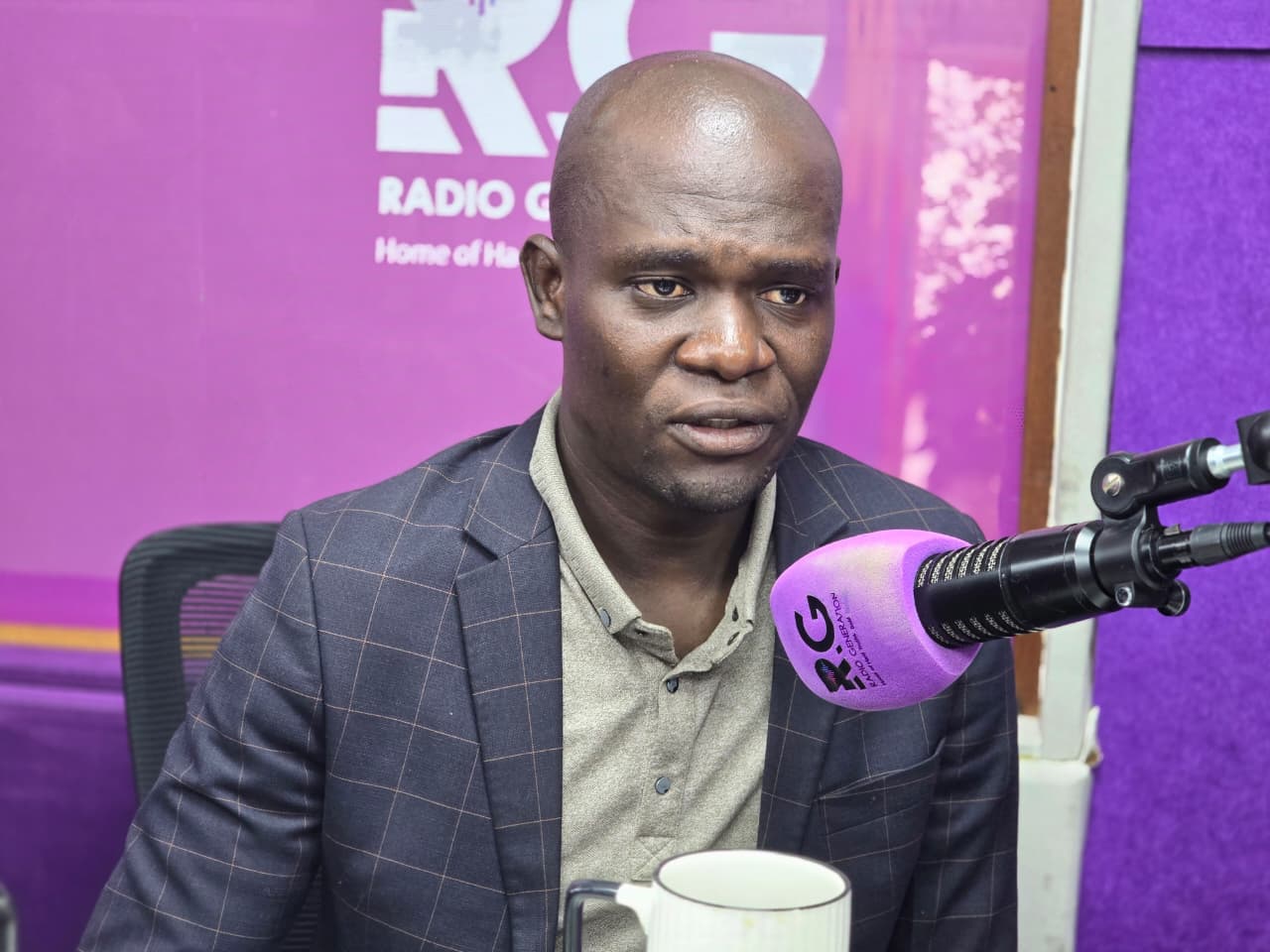
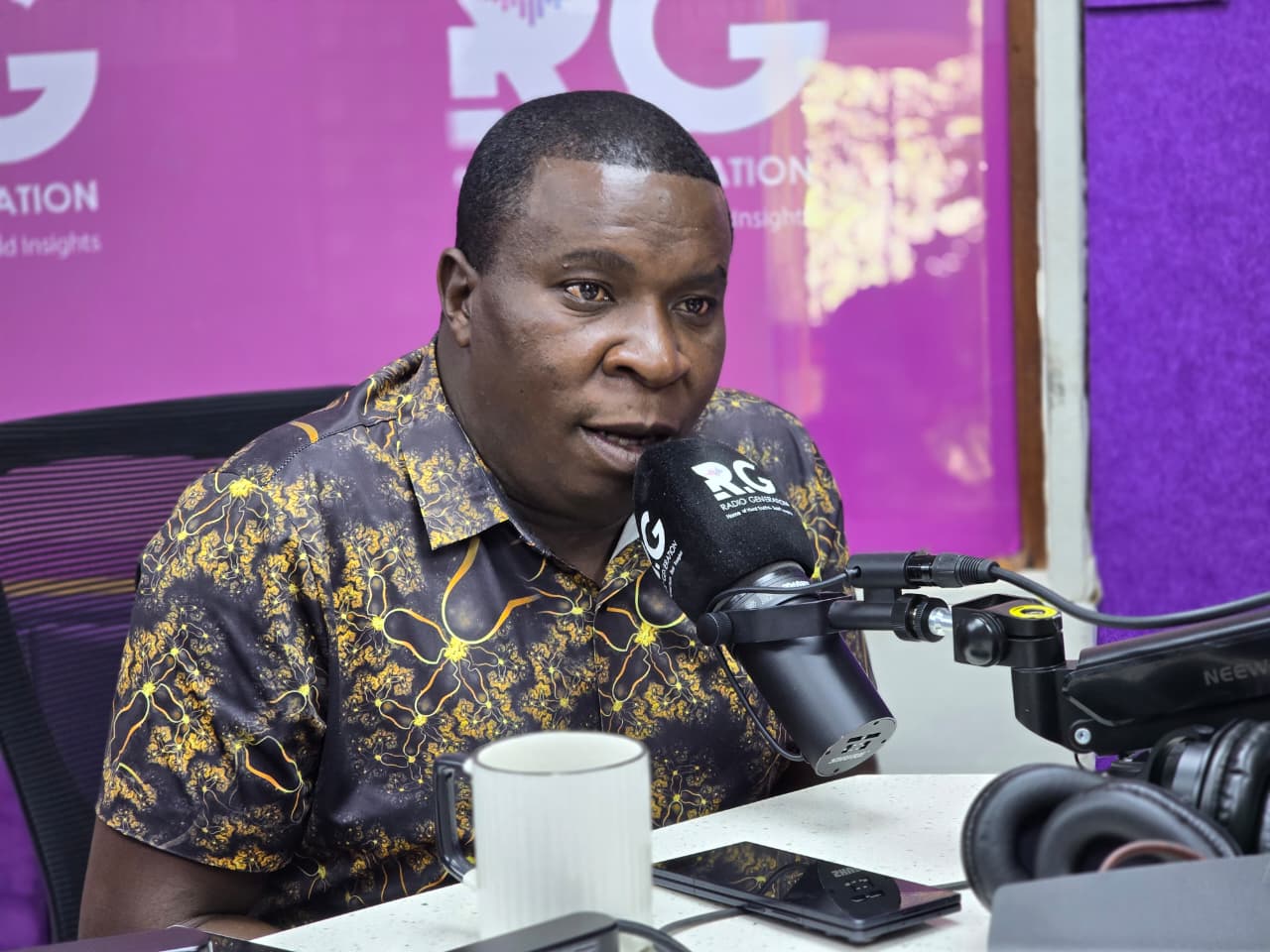
Speaking during a Radio Generation interview on Friday, he described a fully planned 5,000-acre city powered entirely by technology, with underground service systems, vacuum waste collection, green energy supply and thousands of jobs already taking shape.
“Konza is a mastered 5000 acres new city that will be 100 percent be driven by technology. We have mastered the entire 5000 and we have divided it into different units and parts,” he said.
He explained that the city follows a clear zoning plan. The first section along Mombasa Road is a commercial strip, followed by a technology zone. Residential areas come next, arranged according to population density, then an education belt and finally an industrial area.
Within the education band stands the Kenya Advanced Institute of Science and Technology, which he said is complete and awaiting its charter.
“Fully complete and done. We are waiting for charter next month by the President. This will be the first all graduate science university in the country,” he said, noting that the project was funded by Korea.
Konza is also home to the Open University of Kenya.
“It is a public, chartered university by the President, and right now we have 11,000 students, it’s a 100% online university, powered fully by Konza,” he said.
He added that Riara University is in the process of moving its main campus to the city.
In the industrial zone, a Chinese garment manufacturer, Lucky DJX, has set up operations under an export processing arrangement.
“Lucky DJX will be employing 3000 Kenyans to start working and by the end of the year, we should be able to employ about 6000 Kenyans,” he said.
He pointed out that Konza is the only institution in the country that operates as a special economic zone with an export processing zone inside it.
According to Mucendu, Phase One infrastructure covering between 600 and 700 acres has been completed. A key feature of the development is that utilities are placed underground.
“There will not be any overhead service in Konza,” he said, adding that a 2.5 metre by 2.5 metre underground tunnel has been built to carry storm water and sewer lines.
Waste is handled through a vacuum-based system.
“You don’t see those lorries that carry garbage, once the garbage canal fills up, it sends a signal to the Waste Management Center and it is vacuumed,” he said.
The waste is then treated, compressed for recycling or turned into compost.
The city also runs a water reclamation plant designed to reuse most of its wastewater.
“We can now reclaim 80 percent of all our wastewater, we treat it and recycle. Yes, 20 percent to drinkable level,” he said, adding that the reclaimed water is currently used for landscaping and greening.
At the heart of the city’s digital system is the National Data Center.
“It is a tier three both by design and construction. It is an ISO certified data center, third or fourth in Africa,” he said.
He added that government agencies have been directed to stop setting up separate data centres and instead use Konza’s shared digital infrastructure.
“You can no longer invest money on physical data centers because we are helping government digitize through Konza cloud,” he said.
To ensure continuity, a recovery site has been built about 130 kilometres away to mirror operations.
“If something was to happen, as a client, you will not even know there was a hitch.”
Power supply is supported by what he described as the second largest substation in the country, drawing electricity from geothermal and hydro sources.
“So it’s 100% green energy,” he said.
Transport planning includes non-motorised pathways and a Bus Rapid Transit system. He said the design goes beyond traditional road planning.
“We don’t talk about streets in Konza, we talk about streetscapes,” he said, explaining that lighting poles will combine street lights, traffic cameras, advertising screens and air quality sensors.
“We are able to manage the levels of oxygen within the city,” he added.
Mucendu placed the project at the centre of the government’s Digital Super Highway programme, which aims to expand digital access and create online jobs.
“We are doing 1450 digital hubs,” he said, adding that 100 pilot hubs are funded through the Universal Services Fund, while last-mile connectivity is supported through Kenya Power lines.
Citing the International Telecommunication Union, he said, “By 2031 we should have about 27 to 28 million jobs online in Africa alone, and those lines will only go to countries that are prepared enough.”
He maintained that Konza is designed to position Kenya among those ready nations, combining technology, education, industry and green systems into one integrated smart city.